
Hussain Sajwani: From Dubai Shop Floor to a Global Business Empire
The DAMAC founder built his career from food services and property development, then moved into luxury brands, global investments and data centres.

Introduction
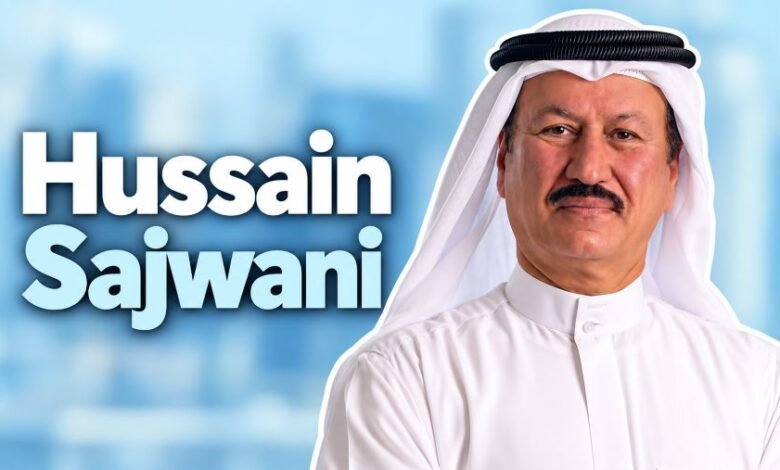
Hussain Sajwani is an Emirati businessman best known as the founder and chairman of DAMAC Group and DAMAC Properties.
His story started much smaller.
He grew up around his father’s shop in Dubai, studied in the United States, worked briefly in the energy sector and then started a catering business. Property came later.
That move changed everything.
Sajwani became one of Dubai’s best-known property developers, building DAMAC into a major real-estate name while expanding his private business interests into fashion, hospitality, investments and data centres.
Forbes Middle East estimated his wealth at about $15.3 billion in 2026, placing him among the richest Arab businesspeople.
Here is how his career developed.
Quick Facts
| Fact | Details |
|---|---|
| Full Name | Hussain Ali Habib Sajwani |
| Known As | Hussain Sajwani |
| Nationality | Emirati |
| Residence | Dubai, United Arab Emirates |
| Age | 73 in Forbes’ 2026 ranking |
| Birth Year | Around 1952–1953 |
| Exact Date of Birth | Not reliably published |
| Profession | Businessman, investor and property developer |
| Known For | Founder of DAMAC |
| Education | Industrial Engineering and Economics |
| University | University of Washington |
| Main Industry | Real estate |
| Company | DAMAC Group / DAMAC Properties |
| Marital Status | Married |
| Children | Ali, Amira, Abbas and Mehdi Sajwani |
| Estimated Net Worth | About $15.3 billion in 2026, according to Forbes |
| Residence Base | Dubai |
Early Life in Dubai
Sajwani grew up in Dubai.
Business surrounded him early.
His father, Ali Sajwani, operated a shop in the local market selling watches, pens, clothing and imported products. Young Hussain spent time there after school.
He watched customers closely.
He saw how prices changed.
He also saw how his father handled stock, buyers and daily business pressure.
His mother also sold goods within the local community.
So business was normal at home.
Sajwani has spoken publicly about the effect his father’s shop had on him. He learned early that a trader must watch demand, understand people and change fast when conditions shift.
Those lessons stayed with him.
Education in the United States
Sajwani received a UAE government scholarship and travelled to the United States in 1978.
He first worked on his English.
Then he attended the University of Washington in Seattle.
He studied industrial engineering and economics, graduating in 1981.
That combination mattered.
Engineering gave him a structured way of thinking. Economics gave him a better understanding of markets, money and business decisions.
There are reports that he had earlier considered studying medicine in Baghdad.
The exact details of that period are not consistently documented, so it is safer to say that medicine was an early interest before his move toward engineering, economics and business.
While studying in America, he was already looking for ways to make money.
Forbes has reported that he sold UAE time-share apartments while still a student.
The business instinct was already there.
Hussain Sajwani Career Started at GASCO
After university, Sajwani joined Abu Dhabi Gas Industries, commonly known as GASCO.
He worked in contracts and finance-related work.
It was a secure job.
He did not stay long.
Sajwani wanted his own business.
So he left salaried employment and started a catering operation in the early 1980s.
That decision became the first big step in his business career.
Building a Catering Business
His catering company served industrial and military clients.
The business supplied meals to companies and organisations working across the Middle East and other regions.
Clients reportedly included Bechtel and the U.S. military.
The operation worked in markets including Kuwait, Saudi Arabia, Qatar, Afghanistan and Bosnia.
This was not glamorous work.
But it made money.
It also taught Sajwani how to handle large contracts, logistics, staffing and tough operating conditions.
Those skills became useful later.
Real estate was still ahead.
Moving Into Investment and Property
Sajwani slowly started putting money into other businesses.
His official business timeline shows DAMAC Invest being established in 1992.
He also became involved in hotels and investment companies.
Dubai was changing quickly.
Population was rising. Trade was growing. International businesses were arriving.
Sajwani saw opportunity.
During the 1990s, he started developing hotels and buying property.
Then Dubai’s property market changed in a much bigger way.
Foreign buyers were allowed to own property in designated areas.
Sajwani moved fast.
Founding DAMAC Properties
DAMAC Properties was founded in 2002.
This became the business most closely linked with his name.
Sajwani focused heavily on luxury property.
One of DAMAC’s early projects was Marina Terrace in Dubai Marina.
The project attracted buyers quickly.
That gave DAMAC momentum.
The company used off-plan sales heavily, selling units before buildings were completed.
This helped fund development while allowing DAMAC to launch projects at speed.
Marketing was aggressive too.
Very aggressive.
DAMAC became known for eye-catching property campaigns. Some promotions offered luxury cars and other high-value incentives with selected property purchases.
It worked.
People remembered the brand.
Luxury Became Part of the DAMAC Identity
Sajwani did not want DAMAC projects to look like standard apartment buildings.
Luxury branding became a major part of the business.
DAMAC has worked with well-known international names connected with fashion, jewellery, hotels and design.
These have included brands such as:
- Versace
- Cavalli
- Fendi
- de GRISOGONO
- Paramount
- Bugatti
The idea was simple.
Sell more than space.
Sell status too.
That approach helped DAMAC stand apart in Dubai’s crowded property market.
The 2008 Property Crash
Then came trouble.
The global financial crisis hit Dubai property hard in 2008 and 2009.
Prices dropped.
Projects slowed.
Buyers pulled back.
Sajwani responded by cutting costs and reducing DAMAC’s exposure.
The company surrendered some land positions and reduced staff.
It was a tough period.
DAMAC also faced disputes from some property buyers over delayed projects.
Court cases and settlements followed in certain cases.
The company survived.
That mattered.
When Dubai property started recovering, DAMAC moved back into expansion.
From Towers to Huge Communities
DAMAC eventually moved beyond individual apartment towers.
It started building large communities.
Well-known developments include:
- DAMAC Hills
- DAMAC Hills 2
- DAMAC Lagoons
- DAMAC Islands
- DAMAC Islands 2
DAMAC Hills became one of the company’s best-known projects.
Golf was part of its identity.
That also brought Sajwani into business with Donald Trump’s company.
Donald Trump Business Relationship
DAMAC and the Trump Organization have worked together on Trump-branded golf projects in Dubai.
Their commercial relationship dates back to around 2013.
One of the best-known developments is Trump International Golf Club Dubai.
The relationship attracted much more attention after Donald Trump won the 2016 U.S. presidential election.
Trump said publicly in January 2017 that Sajwani had offered around $2 billion in new Dubai property deals, which Trump said he declined.
DAMAC confirmed that business discussions had taken place.
This became a major story in the United States because of questions surrounding Trump’s private business interests while serving as president.
The proposed deal itself was not evidence of wrongdoing by Sajwani.
DAMAC Goes Public
DAMAC reached public markets in 2013.
Global depositary receipts connected with the company began trading on the London Stock Exchange in December that year.
DAMAC later listed on the Dubai Financial Market in 2015.
Being public meant investors could buy shares and financial information became more visible.
Years later, Sajwani decided to take the company private again.
Through Maple Invest, he acquired the remaining shares.
DAMAC Properties stopped trading on the Dubai Financial Market in 2022 and was delisted.
The company returned to private ownership.
Buying Roberto Cavalli
Property is only one part of Sajwani’s business interests.
In 2019, a private investment vehicle linked with him acquired Italian fashion house Roberto Cavalli.
That purchase gave his business group a direct position in luxury fashion.
DAMAC Group later acquired Swiss luxury jewellery brand de GRISOGONO.
The connection made sense.
Luxury branding was already a major part of DAMAC property marketing.
Owning luxury brands took that relationship much further.
Investments Outside Real Estate
Sajwani’s private business interests reach across several sectors.
His investment activity has included:
- Real estate
- Hospitality
- Catering
- Fashion
- Luxury goods
- Private equity
- Public markets
- Technology
- Data centres
His private investment network has also had exposure to funds managed by major international investment firms.
This gives Sajwani more than one source of business value.
Property is still the main one.
But it is no longer the only one.
The Move Into Data Centres
One of Sajwani’s biggest newer bets is digital infrastructure.
DAMAC built a data-centre business originally known as EDGNEX Data Centers by DAMAC.
The business now operates under the DAMAC Digital name.
It develops infrastructure used for cloud computing, AI systems and large-scale digital services.
This business has grown quickly.
In January 2025, Sajwani announced plans to invest at least $20 billion in U.S. data centres.
The proposed investment included projects across several American states.
That was a major shift.
A businessman best known for apartments and luxury villas was now placing billions behind computing infrastructure.
By 2026, DAMAC Digital said its planned landbank covered more than 35 sites in 13 countries with up to 6,000 MW of planned IT capacity.
That figure represents planned capacity.
It does not mean all 6,000 MW is already operating.
DAMAC’s Recent Property Growth
Real estate remains huge for Sajwani.
DAMAC reported around $9.8 billion in property sales during 2025.
The group kept launching projects in Dubai while expanding into other markets.
Projects announced or developed around this period included:
- Chelsea Residences
- Riverside Views
- DAMAC District
- Capri One
- DAMAC Islands 2
- DAMAC Hills Baghdad
The Baghdad project marked another large regional expansion.
DAMAC Hills Baghdad covers a very large development area and shows that the company is still looking outside the UAE for growth.
Hussain Sajwani Net Worth
Forbes has tracked Sajwani’s fortune for years.
His estimated wealth has moved sharply because property values, company valuations and private holdings change.
Forbes estimated his fortune at around $3.2 billion in 2016.
By 2024, the estimate was around $5.1 billion.
In 2025, Forbes Middle East placed it near $10.2 billion.
Then came another jump.
Forbes Middle East estimated Hussain Sajwani’s net worth at about $15.3 billion in 2026.
That made him one of the richest Arab businessmen and one of the wealthiest people from the UAE.
Still, this is an estimate.
It is not cash sitting in a bank account.
Most billionaire wealth is tied to companies, property and other investments whose values can rise or fall.
Wife and Family
Sajwani is married.
Reliable public sources do not clearly identify his wife’s name, so it should not be presented as confirmed.
He has four children:
- Ali Sajwani
- Amira Sajwani
- Abbas Sajwani
- Mehdi Sajwani
Several of his children are already active in business.
The Sajwani family is now becoming a second-generation business family rather than a company built around one founder alone.
Ali Sajwani
Ali Sajwani works within the DAMAC business.
He has served as Managing Director – Operations, Finance & Hospitality.
He joined DAMAC in 2014.
He is also connected with Amali Properties, which he co-founded with his sister Amira.
His role places him close to the operational side of the family’s main business.
Amira Sajwani
Amira Sajwani is also active in real estate.
She has served as Managing Director of Sales and Development at DAMAC Properties.
She founded PRYPCO, a property technology and finance business.
She also co-founded Amali Properties.
Her education includes study at University College London and the London School of Economics.
She has become one of the most visible members of the next Sajwani generation.
Abbas Sajwani
Abbas Sajwani founded AHS Properties in 2021.
His company focuses on luxury real estate.
Forbes Middle East placed Abbas on its 2026 billionaire ranking with an estimated fortune of about $1.9 billion.
He was listed as the youngest Arab billionaire on that ranking.
That gives the family another major property business outside DAMAC.
Mehdi Sajwani
Mehdi Sajwani is Hussain Sajwani’s youngest son.
He has appeared publicly with his father.
Compared with Ali, Amira and Abbas, reliable public information about a major current business role for Mehdi is limited.
So claims about his career should be kept careful.
Philanthropy
Sajwani is also involved in charitable work through the Hussain Sajwani–DAMAC Foundation.
Education has been a major focus.
One of its best-known projects is support for the One Million Arab Coders initiative.
The programme was created to help people across the Arab world learn coding and digital skills.
The foundation has also supported food campaigns, education programmes and scholarships.
Publicly reported commitments include AED5 million for the 1 Billion Meals initiative and AED20 million linked with scholarships for Dubai Schools.
The foundation has backed other UAE charitable campaigns too.
Awards and Business Recognition
Sajwani has received several property and business awards.
His official record includes recognition such as:
- Dubai Land Department Real Estate Tycoon Award
- Real Estate Legend at the Arabian Business Real Estate Awards
- Real Estate Business Leader of the Year at the Gulf Business Awards
Forbes Middle East also ranked him first on its Most Impactful Real Estate Leaders 2026 list.
These are industry or editorial recognitions.
They are different from government honours.
Legal Disputes and Controversies
A complete profile should include the difficult periods too.
In Egypt, Sajwani became involved in a legal dispute connected with a Red Sea land transaction.
An Egyptian court convicted him in absentia in 2011.
DAMAC disputed the case.
The dispute was later settled with the Egyptian government.
As part of the settlement, disputed land reverted to the state and DAMAC withdrew an international arbitration claim.
Reports also said execution of Sajwani’s prison sentence was suspended after the settlement.
So the full sequence matters.
Writing only about the original sentence would leave out what happened later.
DAMAC also faced buyer disputes after the 2008 Dubai property crash.
Some buyers went to court over delayed projects.
Again, these cases were connected with individual property disputes rather than evidence of one single company-wide criminal finding.
How Sajwani Runs Business
Sajwani’s career shows a clear pattern.
He acts early.
He watches markets.
Then he moves quickly.
That happened when Dubai opened parts of its property market to foreign buyers.
It happened again after the financial crisis.
And now we see it with data centres.
He also understands branding.
DAMAC did not simply sell apartments.
It sold luxury, location and a certain image.
Basically, Sajwani built businesses around what buyers wanted next, not only what they wanted yesterday.
Risk came with that style.
Some bets worked brilliantly.
Others created disputes or losses.
But he kept moving.
Current Status
Sajwani remains chairman of DAMAC Group.
His business interests now stretch far beyond the original catering company he started decades ago.
Real estate is still the main base.
But fashion, luxury brands, investment funds, hospitality and digital infrastructure are now part of the wider picture.
His children are taking bigger roles too.
That could become one of the biggest changes in the group over the coming years.
The business is becoming a family network.
Not just one man’s company.
Final Thought
Hussain Sajwani built his career in stages.
First came his father’s shop.
Then university.
Then GASCO.
Then catering.
Property changed the scale completely.
DAMAC turned him into one of the best-known businessmen in Dubai, while later investments pushed his name into fashion, luxury goods and data infrastructure.
His estimated fortune now runs into billions.
Still, the more interesting part is the pattern behind it.
He keeps watching markets.
Then he acts.
That simple habit has followed him from a small Dubai shop to one of the region’s largest private business groups.
Frequently Asked Questions
Who is Hussain Sajwani?
Hussain Sajwani is an Emirati businessman, investor and property developer. He is the founder and chairman of DAMAC Group and is best known for building DAMAC Properties.
What is Hussain Sajwani’s net worth?
Forbes Middle East estimated his net worth at about $15.3 billion in 2026. Net-worth figures can change with business and asset values.
How old is Hussain Sajwani?
Forbes listed him as 73 years old in 2026.
When was Hussain Sajwani born?
His exact birth date is not reliably confirmed by strong public sources. His reported age suggests he was born around 1952 or 1953.
What did Hussain Sajwani study?
He studied industrial engineering and economics at the University of Washington and graduated in 1981.
How did Hussain Sajwani become rich?
His early business was catering, but most of his wealth came from real estate through DAMAC Properties. His business interests later expanded into investments, fashion, luxury brands and data centres.
Who are Hussain Sajwani’s children?
His publicly identified children are Ali Sajwani, Amira Sajwani, Abbas Sajwani and Mehdi Sajwani.
Is Hussain Sajwani the owner of DAMAC?
Sajwani founded DAMAC and remains chairman of DAMAC Group. DAMAC Properties returned to private ownership after its delisting from the Dubai Financial Market in 2022.